25.05.2009

Les vrais héros de la Résistance !

Biographies


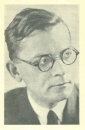
Otto Hermann Hampel (21 juin 1897 - 8 avril 1943)
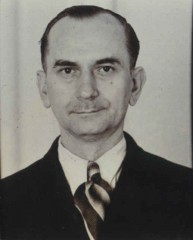
 Otto Hampel.jpg

Otto Hermann Hampel est né à Mühlbock / Posen le 21 juin 1897. Après son engagement dans la première guerre mondiale, il travailla pour la compagnie de câbles électriques Siemens-Schuckert (1) à Berlin-Reinickendorf, où il devint ajusteur.
Otto Hampel fut membre du Stahlhelm (le Casque d'acier, association d'anciens combattants) de 1928 à 1933. Il se maria avec Elise Lemme en 1935.


Elise Hampel (27 octobre 1903 - 8 avril 1943)
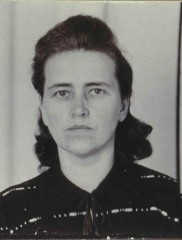
Elise Hampel.jpgElise Lemme est née à Bismark / Stendal le 27 octobre 1903. Après l'école élémentaire, elle travailla comme servante de maison. Elise Hampel rejoignit la « National Sozialist Frauenschaft » (communauté des femmes allemandes) en 1936, et fut chef de groupe jusqu'en 1940.


La mort du frère d'Elise, durant la campagne de France, amena les époux Hampel à devenir des opposants au régime nazi.
De septembre 1940 jusqu'à leur arrestation à la fin septembre 1942, ils écrivirent des cartes postales et plus de 200 tracts, rédigés à la main (3), qu'ils distribuèrent dans les boîtes aux lettres et les cages d'escalier de Berlin, parfois proche de leur quartier de Wedding. Ces cartes et ces tracts encourageaient les gens à ne plus donner aux collectes publiques nationales-socialistes, à refuser de servir dans l'armée et à renverser Hitler.

Les Hampel furent trahis et furent arrêtés le 20 octobre 1942. Otto Hampel déclara à la police être « heureux à l'idée » de protester contre Hitler et son régime.

Otto et Elise Hampel furent condamnés à mort le 22 janvier 1943 par la Seconde Chambre de la Cour populaire pour « atteinte au moral des troupes » et « préparation de haute trahison » et furent assassiné à la prison de Berlin-Plötzensee (2) le 8 avril 1943.


Hans Fallada a basé son roman « Jeder stirbt für sich allein » sur l'histoire de ce couple exemplaire. Il travailla à partir du dossier de la Gestapo, qui lui avait communiqué son ami Johannes R. Becher, en octobre 1946.


Alain C. mai 2009
adaptation du texte disponible sur le site du
German Resistance Memorial Center
 http://www.gdw-berlin.de/bio/ausgabe_mit-e.php?id=370


Notes :

(1) http://en.wikipedia.org/wiki/Siemens-Schuckertwerke

(2) Nous vous recommandons de visiter le site du Memorial de la Prison de Plötzensee, on y trouve de nombreux documents (en allemand ou en anglais) à propos de ce lieu tragique et des résistants allemands au régime national-socialiste qui y ont été exécutés.

On peut y télécharger gratuitement un document en anglais au format PDF (81 pages) sur le Mémorial. On y trouve également de nombreux fac-similé de documents d'époque (malheureusement, tous en allemand). Il suffit de fouiller un peu (mais le site étant bien fait, ça va vite !).
en anglais : http://www.gedenkstaette-ploetzensee.de/index_e.html
en allemand : http://www.gedenkstaette-ploetzensee.de/index.html

(3) Inconscience de leur part ou courage délibéré ? Nous ne savons pas. Peut-être ont-ils simplement suivis leur instinct ? Comme le remarquait Adams Brooks, dans la préface de son livre La loi de la civilisation et de la décadence (Paris, Félix Alcan, 1899) : « Au moment de l'action, l'être humain obéit presque inévitablement à l'instinct, comme un animal ; ce n'est qu'une fois l'action terminée, qu'il réfléchit ».

24.05.2009

In memory of Elise Hampel

Elise Hampel (October 27, 1903 - April 08, 1943)

Elise Hampel was born in Bismark/Stendal on October 27, 1903. After finishing elementary school she worked as a domestic servant. She married Otto Hampel in 1935. Elise Hampel joined the National Socialist Frauenschaft (Women’s League) in 1936, leading a group until 1940. Her brother’s death during the German assault on France prompted Elise and her husband to become opponents of the Nazi regime. From September 1940 until their arrest at the end of September 1942, they wrote postcards and more than 200 handwritten leaflets, which they distributed to mailboxes and staircases in Berlin, often near their home in the district of Wedding. The cards and leaflets encouraged people not to donate to National Socialist public collections, to refuse to serve in the war, and to overthrow Hitler. The Hampels were betrayed, and were arrested on October 20, 1942. Otto Hampel declared to the police that he was "happy with the idea" of protesting against Hitler and his regime. Otto and Elise Hampel were sentenced to death on January 22, 1943 by the 2nd Senate of the People’s Court for "demoralizing the troops" and "preparation for high treason," and murdered in Berlin-Plötzensee on April 8, 1943. Hans Fallada based his novel "Jeder stirbt für sich allein" on their story.

Elise Hampel.jpg

In memory of Otto Hampel


Otto Hermann Hampel (June 21, 1897 - April 08, 1943)

Otto Hermann Hampel was born in Mühlbock/Posen on June 21, 1897. After serving in World War I, he worked in the Siemens-Schuckert cable factory in Berlin-Reinickendorf, ending up as a fitter. He was a member of the Stahlhelm (Steel Helmet federation of combat veterans) from 1928 to 1933. He married Elise Lemme in 1935. The death of Elise Hampel’s brother during the German assault on France prompted Otto Hampel and his wife to become opponents of the Nazi regime. From September 1940 until their arrest at the end of September 1942, they wrote postcards and more than 200 handwritten leaflets, which they distributed to mailboxes and staircases in Berlin, often near their home in the district of Wedding. The cards and leaflets encouraged people not to donate to National Socialist public collections, to refuse to serve in the war, and to overthrow Hitler. The Hampels were betrayed, and were arrested on October 20, 1942. Otto Hampel declared to the police that he was "happy with the idea" of protesting against Hitler and his regime. Otto and Elise Hampel were sentenced to death on January 22, 1943 by the 2nd Senate of the People’s Court for "demoralizing the troops" and "preparation for high treason," and murdered in Berlin-Plötzensee on April 8, 1943. Hans Fallada based his novel "Jeder stirbt für sich allein" on their story.

Otto Hampel.jpg

German Resistance Memorial Center

http://www.gdw-berlin.de/ged/geschichte-e.php

The above link leads to an interesting web site about the German Resistance against Hitler (see more details herebelow)

History

The German Resistance Memorial Center is located in the Bendler Block in Berlin’s Mitte district, at the historic site of the attempted coup of July 20, 1944. On July 20, 1952, on the initiative of relatives of the resistance fighters of July 20, 1944, Eva Olbricht, widow of General Friedrich Olbricht, laid the cornerstone for a memorial in the courtyard of the Bendler Block. July 20, 1953, Berlin's mayor Ernst Reuter unveiled the monument created by Professor Richard Scheibe, the bronze figure of a young man with his hands bound. On July 20, 1955, the former Bendlerstrasse was ceremoniously renamed “Stauffenbergstrasse.” On July 20, 1962, Berlin's mayor Franz Amrehn unveiled a plaque in the commemorative courtyard bearing the names of the officers executed there by a firing squad on July 20, 1944.

On the initiative of the circle of resistance fighters of July 20, 1944, the Berlin Senate in 1967 resolved to establish a memorial and educational center intended to inform the public about resistance to National Socialism. The permanent exhibition developed under the direction of historian Friedrich Zipfel was then opened on July 20, 1968. In 1979, the parties in Berlin's state parliament reached agreement on the proposal to expand the memorial and educational center. In 1980, the commemorative courtyard was remodeled according to a design by Professor Erich Reusch. The following inscription was engraved in the wall of the entrance to the commemorative courtyard:

“Here in the former Army High Command, Germans organized the attempt to overthrow the lawless National Socialist regime on July 20, 1944. For this they sacrificed their lives.”

In 1983, Berlin's mayor Richard von Weizsäcker commissioned historian Professor Peter Steinbach and Stuttgart designer Professor Hans Peter Hoch to create a permanent exhibition comprehensively depicting and documenting the entire broad and varied spectrum of German resistance to National Socialism. This exhibition was opened on July 20, 1989, in the historic rooms of the attempted coup of July 20, 1944, on the second floor of the Bendler Block in the wing of the building on Stauffenbergstrasse. More than 5,000 photographs and documents present examples of the motives, actions, and goals of individuals, groups, and organizations involved in resistance to National Socialism.

The wing of the building complex along the Landwehrkanal has been the Berlin office of the German Federal Ministry of Defense since 1993. Since 1992, the German Resistance Memorial Center has expanded beyond the commemorative courtyard and the permanent exhibition and has acquired further space for temporary exhibitions in the first upper floor on Stauffenbergstrasse.

19.05.2009

Hans Fallada imprisoned !!

[English Translation courtesy of Otto, from the Ironic Chronicle (http://www.otto5.com/)


English translation of German press release

Book About Fallada's 1944 Imprisonment Introduced

May 8, 2009

Wittenhagen (dpa) The diary kept by the author Hans Fallada (1883 - 1947) during his imprisonment in 1944 will be presented at a ceremony in the Wittenhagen (Feldberg) art gallery today. The book was recently published by Aufbau. The book, entitled In My Foreign Land: Prison Diary of 1944, consists, in part, of encoded notes regarding his three month imprisonment that he was able to smuggle out of prison. The authors of the book are the Northern Ireland Fallada expert, Jenny Williams, and Sabine Lange of Feldberg. Fallada, who was a chronic alcoholic and who at the time lived in the neighboring community of Carwitz, was imprisoned in Alt-Strelitz in 1944 on account of an attempted murder of his wife. (7:30 PM - art gallery)

newbook.jpg

Original German press release

Fallada-Buch über Haftzeit 1944 vorgestellt

08.05.2009

Wittenhagen (dpa) In der Kunsthalle Wittenhagen bei Feldberg wird heute das Hafttagebuch des Dichters Hans Fallada (1883-1947) aus dem Jahr 1944 vorgestellt. Es ist kürzlich im Aufbau- Verlag erschienen. Das Buch mit dem Titel „In meinem fremden Land - Gefängnistagebuch 1944“ enthält zum Teil verschlüsselte Notizen aus Falladas dreimonatiger Haft, die er aus dem Gefängnis herausschmuggeln konnte. Autorinnen des Buches sind die nordirische Fallada-Expertin Jenny Williams und die Feldbergerin Sabine Lange. Der alkoholkranke Dichter, der damals im Nachbarort Carwitz lebte, kam 1944 wegen Mordversuchs an seiner Frau in Alt-Strelitz in Haft. (1930 - Kunsthalle)

Translated from the German by: Otto Hinckelmann, May 17, 2009

02.05.2009

ULI DITZEN INTERVIEW !

Dear weblog Readers,

This link will direct you to an interview with Ulrich Ditzen, son of Rudolf Ditzen.

A conversation about German writer Hans Fallada

 uliditzen.jpg

We hope you enjoy it,
courtesy of the team at CharlieRose.com

Alain C [may 2nd, 2009] 


http://www.charlierose.com/view/interview/10224

Toutes les notes