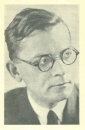
30.04.2009

Geheimes Tagebuch entdeckt

[30 avril 2009 : nous publions cet extrait de presse qui nous semble intéressant. Si des visiteurs pouvaient le traduire pour le site, ou nous en dire plus...]

From :

http://www.bz-berlin.de/kultur/literatur/geheimes-tagebuc...

Hans-Fallada-Fund

Geheimes Tagebuch
entdeckt

28. April 2009 16.30 Uhr, Michael Zöllner

Lange galt Falladas Tagebuch als verschollen. Jetzt wurde seine Abrechnung mit der Nazi-Zeit entdeckt.

Er war ein Alkoholiker und Morphinist, ein körperliches, seelisches Wrack und des Schreibens seit längerer Zeit unfähig. Als Hans Fallada (1893-1947) am 4.9.1944 ins Gefängnis Neustrelitz-Strelitz eingewiesen wird, ist er am Ende.

Bis zum 13.12.1944 sitzt der Schriftsteller hinter Gittern, weil er versucht haben soll, seine geschiedene Ehefrau Anna zu erschießen. Lange galten seine Tagebuchaufzeichnungen aus dieser Zeit als verschollen. Jetzt erscheinen sie in dem Band "In meinem fremden Land" (Aufbau-Verlag, 24,95 Euro). Fallada schrieb sich das "Schwerste von der Seele", schilderte das Leben während der Nazi-Diktatur und rechnete mit den "unverbesserlichen Deutschen" ab.

92 Bogen weißes Papier erhält er von der Gefängnisleitung. Eng beschreibt er sie, auch zwischen den Zeilen, dreht und wendet das Papier immer wieder. Er benutzt Abkürzungen und eine Geheimschrift, damit seine Äußerungen nicht entschlüsselt werden können. Am 8.10.1944 erhält er einen Tag Hafturlaub. Unter seinem Hemd schmuggelt er die Blätter aus dem Gefängnis. Nach dem Krieg werden die Texte zum Teil veröffentlicht. Allerdings überarbeitet: Seine antisemitischen Äußerungen hat Fallada entschärft.

About a page-turner

From

http://www.npr.org/templates/story/story.php?storyId=1036...


Books

A Recently Rediscovered Page-Turner Of Nazi Berlin

by John Powers


Fresh Air from WHYY, April 30, 2009 · There are some things that history books, even good ones, can't teach you. I was recently reading The Third Reich at War, the final volume of Richard J. Evans' magnificent trilogy about the rise and fall of Nazi Germany. Late in the book, Evans notes that there was some civilian opposition to Hitler, then adds the crushing truth. It was hopeless. The only people who could've changed things belonged to the military — figures like Count von Stauffenberg, the officer played by Tom Cruise in the movie Valkyrie. The others, however heroic, were just small fry.

Now, if you want to know what it was like to be small fry in that demented reich, you're better off going to Every Man Dies Alone, the recently rediscovered 1947 novel by the German writer Hans Fallada. Vibrantly translated by Michael Hofmann, this story of ordinary resistance to Nazism is at once a riveting page-turner and a memorable portrait of wartime Berlin.

The story centers on a married couple, Otto and Anna Quangel, who hear that their son has been killed in the war. While Anna falls into rage and despair, the normally passionless Otto — a stolid, laconic foreman whose men think of him as a machine — decides they should act. The two begin entering public buildings and leaving a single postcard with an anti-fascist message for someone to find. It's a small act, but they know that one mistake will mean their own doom — as well as ruin their family and friends.

Fallada uses the Quangel's rebellion as the launching pad for a panorama of life under the Nazis. There's the retired judge who quietly deplores Hitler and the apartment super who robs his frail Jewish tenant knowing she won't dare report the crime. There's the Hitler Youth who bullies his parents and the postal worker who flees to the countryside in despair when she learns that her beloved son has been seen smashing Jewish babies' heads against car fenders.

The most complicated figure is Inspector Escherich, the Gestapo man who's chasing the Postcard Phantom, as he calls the people dropping the subversive messages. As he tracks down the Quangels, he goes from being a thoughtless, sometimes violent servant of the Reich to a man who comes to grasp that he himself is merely a replaceable cog in a society run by gangsters.

If anything binds these diverse characters, it's that they share the paradoxical condition created by police states. Even as they feel desperately isolated and alone, they also feel that they're not alone — somebody out there is watching, or could be watching, every single thing they do. It's a feeling Fallada knew first hand. He lived a life of drug abuse, alcoholism, asylums and prison. As both a writer and an addict, he spent much of life trapped inside his own head — yet aware that he was under surveillance.

Perhaps because he was himself an outsider, Fallada has a knack for capturing the small, unglamorous, seemingly futile heroism of the Quangels. Virtually all the people who find their postcards are either such loyal Nazi citizens or so such cowed ones that they instantly turn these hot potatoes into the authorities. And still the Quangels fight their fear and go on.

With its vivid cast of characters and pervasive sense of menace, Every Man Dies Alone is an exciting book. Yet like so many stories about Hitler's Germany, it's also a challenge. It compels you to wonder how you would behave if you were in the same dreadful situation. I mean, it's easy enough to think that, with his position and resources, we would've been as brave as Oskar Schindler, who even had the satisfaction of knowing he was saving lives. But what if you were Otto and Anna — with no real power — and no way of knowing if your actions achieved anything at all?

Without being sentimental about it, Fallada suggests that the Quangels may not have changed the regime, but they did change themselves. The workaholic Otto finds himself opening up to many wonderful things he'd never bothered to notice — he becomes more fully human. As for Anna, she has the transcendent satisfaction of knowing she fought back against evil. She may not have been able to save the world, but at least she tried to save her own soul.

Now that may not seem like very much in the grand sweep of history, but Fallada makes us understand that, in frail, mortal, human terms, such courage is more than enough.

The Human Comedy

From :

http://www.laweekly.com/2009-04-30/art-books/the-human-comedy-reintroducing-hans-fallada/

The Human Comedy: Reintroducing Hans Fallada

By Nathan Ihara

Published on April 29, 2009 at 5:08pm

Rudolph Ditzen took the pen name Hans Fallada in 1913 to protect his family - his father was a respected judge - from embarrassment at his first angst-ridden novel. He took "Hans" from the folktale of "Lucky Hans," the story of a foolish farmer who barters away all his possessions, trading his life savings for a horse, the horse for a cow, and so on, until he is left carrying a millstone down a dusty road. The farmer's natural optimism, however, is such that he views each new item as a wonderful bit of luck, and when his millstone rolls into a river, he feels "light at heart, free from all his troubles."

"Fallada" derives from the fairy tale of "The Goose Girl," in which a cruel chambermaid swaps identities with a princess as she travels to be married. The only witness is a horse, Falada, whom the false princess orders beheaded. The true princess bribes a servant to have the horse's head nailed above the gate to the city, where it sings songs bewailing the crimes it has witnessed. These twin motifs - the fool's cheer in the face of hardship, and the lonely voice singing against injustice - would mark much of Fallada's work, as he wrote through the economic blight of the Weimar Republic and the atrocities of the Third Reich.

A troubled, sickly, guilt-ridden youth, Fallada was just 18 when he and one of his few friends arranged to kill each other in a staged duel. The friend died, Fallada survived. Over the course of his life, he would spend many years in and out of mental institutions, was often unemployed, and succumbed periodically to his alcohol and morphine addictions. He considered writing his great escape (he called it his "little death"), and he wrote with the same voracious speed as he smoked his hundreds of daily cigarettes. Part of the "New Objectivity" ( "Die Neue Sachlichkeit" ) art movement, Fallada's writing is intentionally plain: Grocery lists make more appearances than metaphors, the characters speak in exclamations, and weep easily. Though the goal is realism, there are elements of pantomime and slapstick. The characters tend to be flat, social types, but Fallada renders them with great sympathy and vividness. There's a strong genetic connection between his writing and the films of Charlie Chaplin- The Tramp is essentially a comic figure rather than a "real" person, yet in his travails and hardships we cannot help but feel his humanity. Fallada's characters - cruel bosses, generous libertines, petty thieves, Nazi thugs, bumbling drunks, hapless young lovers - are a literary paradox, simultaneously static and vibrating with life. There is no great mystery to them, but their lives are full of surprises.

Fallada's 1932 novel, Little Man, What Now?, tells the tale of a naive young married couple, Johannes and Lammchen, as they struggle to make ends meet in the aftermath of World War I. It became an international success, was translated into 20 languages and made into two films. Though the novel's theme is the hardships of poverty, the tone remains light, comic and sweet, with many whimsical scenes, as when Johannes spends all his wages on a fancy dressing table - their only furniture - or when a pregnant Lammchen eats their entire salmon dinner and weeps with guilt. Fallada never directly addresses politics - he is no Bertolt Brecht - but the reader becomes acutely aware of the tensions in the air: National Socialists clash with communists in the street, the parks teem with the unemployed, cruel bosses fire their employees only to fall victim to the next wave of layoffs. By novel's end, Johannes has been crushed by the economy. Ragged, jobless, he cowers in the bushes until his wife coaxes him back into their cottage - a similar note to the last scene of Modern Times as The Tramp urges the beautiful gamin to "Buck up!" Little Man ends on this bittersweet note: Times are hard, food is scarce, there are riots in the streets and strikes at the factory, but hope remains, love remains.

By the time he wrote The Drinker, hope and love were mostly gone. After the rise of the Nazis, Fallada was deemed an undesirable writer, and his marriage had fallen into chaos as a result of his manias and drinking. For firing a revolver at his wife, Fallada was thrown into a psychiatric prison. While there, he wrote a semiautobiographical novel of an incompetent small-town businessman, Erwin Sommer, who destroys his business, his marriage and his life through his sudden infatuation with schnapps. For a ruined man writing in prison during a terrible war, Fallada surprisingly kept his comic undertones, and the first half of the novel has the slapstick escapades of a dark farce. His character makes one poor decision after another, full of braggadocio and self-satisfaction even as he inexorably falls. In one sublime scene, after being called up to a barmaid's room for a tryst, the narrator takes off his shoes but then dreamily climbs out a window and wanders home in the countryside, singing songs and drinking brandy. Only when his wife finds him drinking the last of her cooking sherry does Fallada mention the man's bleeding feet.  

This is a repeated Fallada trope: a veneer of humor over half-hidden and horrible truths. By the novel's second half, the veneer begins to scrape away as the narrator's humiliations and degradations mount. He is charged with murder, imprisoned, robbed, beaten, and his nose bitten off by another convict. When The Tramp goes to prison in Modern Times, it is an excuse for a Keystone Cops routine, but Fallada's descriptions of the prison inmates have a harrowing veracity unlike either a Chaplin film or Fallada's Little Man. A lovelorn prisoner is callously tricked out of his tobacco by a beautiful young inmate. Herr Sommer's cellmate, Holz, is a "master" at imagining delicious meals (a common practice among the starving inmates): "He was most eloquent when he described how a farmer had . given the convict-party pieces of bread spread thick with 'good butter'... [and] his voice trembled as he described how his stomach had not been able to stand the unwonted rich food, and he had brought it all up again."

There's a ruthless sadness and accuracy to these details, and one senses that Fallada's old literary model is bending to breaking point. How can his broad plot lines and simple characters encompass such madness? After World War II, Chaplin said if he had known the true extent of the Nazis' monstrosity, he would not have been able to make The Great Dictator, and one of the pleasures of The Drinker is watching Fallada's style shift under the strain of witnessing the naked depths of the human experience.

Released from prison after the war, Fallada was a nervous wreck. He had left his wife, and remarried a fellow morphine addict in Berlin. In hopes of reinspiring him, one of his literary patrons gave him a Gestapo file concerning a famous case that took place in Berlin under Nazi rule: A middle-aged couple, who for years spread hundreds of anti-Nazi propaganda post cards around Berlin, avoided capture and infuriated the SS. Fallada took this material, and at his typical breakneck pace, in 24 days produced Every Man Dies Alone. Having already investigated the suffering of poverty and addiction, in this novel, his masterpiece, he bears witness to the 20th century's greatest crime. Primo Levi hailed the work as "the greatest book ever written about German resistance to the Nazis," and Levi and Fallada's books share an understanding that while the Nazis were evil, the moral corruption of citizens and prisoners themselves was nearly as grotesque.

Fallada's depiction of wartime Berlin reveals dissolution on all levels of civilization: Yes, there are brutish Gestapo agents and sadistic SS torturers, but equally fiendish are the looters, blackmailers and bullies among the general population. When a man, the morning after learning his son has died at the front, complains that Germany's new wealth "isn't worth a single dead body," his neighbor reminds him, "You know I can get you put in a concentration camp for defeatist mutterings like that," and promptly tries to cadge 10 marks.

This is not a novel about a monolithic evil empire but rather one that charts a million transgressions. One of its major side plots features two louts' bumbling attempts to steal a dead Jewish woman's linens. For a few marks a boy beats up his father. The leader of a communist resistance cell smugly orders a young woman to commit suicide because she has jeopardized their security. Every Man Dies Alone is a vision of humanity unmasked, of our basest instincts given free rein.

Fallada spares no one: The retired judge who shelters a Jewish woman is so cold in his rules of her confinement that she decides to kill herself rather than live forever in a shuttered room. Otto and Anna Quangel, the couple heroically defying the Nazis, are shown to be fools: They dream of instigating righteous resistance, but no one reads their post cards; every single one is either destroyed or turned over immediately to the Gestapo. After his capture, and realizing the futility of his efforts, Otto sighs, "Given the chance I'd do it again. Only, I'd do it very differently."

The novel's final chapter, fittingly titled "The End," is aswarm with misery. Yet in these final pages, stripped of hope, love and the last vestiges of civilization, Fallada reaches new artistic heights. In a surreal tangent, Otto Quangel is thrown into a cell with a psychotic SS officer, who believes that he is a dog. This dog-man bites Otto, steals his food, licks his entire body, and generally torments the poor man. But surprisingly, the dog-man learns to like Otto, and as Otto is led away to trial, he "howled piteously ... [and] when Karlchen the dog was driven back into his cell, then Quangel's face was no longer cold and implacable, and in his heart he felt a slight pressure akin to regret. The man who all his life had only ever given his heart to one being, his wife, was sorry to see the multiple murderer, the beast of a man, pass out of his life." Otto has been slipped a cyanide pill, which he plans to take before his execution, but as he's led toward the guillotine, "A terrible, tormenting curiosity tickled him. ... A couple minutes more, he thought. I must know what it feels like to lie on the table. ..." Miraculously, here at the bitter end, the spirit of Lucky Hans is still alive, still nursing his perverse optimism, still finding something worthwhile in his wretched life: His compassion and curiosity may be irrational but they survive. Even the sensation of your own murder has some small value.

After finishing the novel in 1946, Fallada told his sister Elisabeth, "At last I've got one right." He died before he saw it published. The first English translation, lovingly prepared by Melville House, deserves celebration for its historical insight, its literary beauty and its rare sense of humanity.

28.04.2009

Hans Fallada Haus (Carwitz)


autour de Hans Fallada


19.04.2009

une photo rare

fallada-desk.jpg

Toutes les notes